
How Today’s Science Bridges Causation Gaps in Historical Occupational Manganese Cases

How Today’s Science Bridges Causation Gaps in Historical Occupational Manganese Cases
For years, welding fume plaintiffs struggled at the admissibility stage. In the Welding Fume MDL, courts denied class certification and appellate scrutiny focused on expert opinions that were deemed speculative on causation. The Sixth Circuit’s decision in Tamraz v. Lincoln Electric set the tone, holding that the neurologist’s specific causation opinions outpaced the evidence then available.
Brief history of the Welding Fume MDL and its causation problem
The MDL centralized thousands of claims that manganese in welding consumables caused neurologic injury. In 2007 the court rejected class certification because exposure intensity, products used, medical status, state law, and damages differed across workers. Bellwether trials produced mixed results. The key inflection point came in 2010 when the Sixth Circuit reversed a large verdict in Tamraz, concluding that specific causation testimony relied on inference rather than reliable methods tied to the plaintiff’s dose and mechanism. That ruling raised the Daubert bar for these cases within the circuit. The MDL also issued opinions that trimmed some labeling theories under OSHA’s Hazard Communication framework, which narrowed uniform warning arguments. By 2012 the docket wound down through a negotiated resolution process rather than a class judgment. The common thread for these cases was causation. Courts wanted longitudinal human data, objective and reproducible biomarkers, and tighter exposure reconstructions than the record then supplied.
Why this time is different
Since 2010, three advances have changed the analysis. First, longitudinal cohorts now show dose response and progression at real world manganese levels. Second, quantitative MRI of basal ganglia signals offers an objective marker that tracks exposure and sometimes shows partial reversibility after exposure reduction. Third, modern health based limits for respirable manganese moved down sharply, creating a clearer standard of care gap where plants relied only on older limits.
What changed since 2010
1) Larger, longer human studies that track people over time
In 2017, a U.S. trade-union cohort study in Neurology followed 886 welders and conducted 1,492 specialist examinations over multiple years. It found a dose-dependent progression of parkinsonism: the more manganese a person accumulated from welding fumes, the more their motor symptoms worsened, and the progression slowed when exposure fell. This was the first large, longitudinal dataset to show both dose response and progression at realistic workplace levels, addressing the very gap courts highlighted in 2010.
Authoritative public-health summaries, updated after 2010, now synthesize this broader human and animal evidence in one place. The Agency for Toxic Substances and Disease Registry and the National Institutes of Health both explain how manganese inhalation in work settings can lead to basal ganglia injury and parkinsonian syndromes, offering digestible, citable science for expert reports.
Why this matters in court: Earlier cases leaned on cross-sectional snapshots. This 2017 cohort and the follow-on syntheses could let an expert say, with citations, that real workers observed over years show a clear exposure to symptom relationship that worsens with dose and eases when exposure drops.
2) Objective brain imaging moved from descriptive to measurable
Before 2010, radiologists described a bright “signal” on T1-weighted MRI in a brain region called the globus pallidus among people with high manganese exposure, but it was largely qualitative. Since then, multiple teams have quantified that signal and linked it to exposure levels.
A 2022 critical review describes the use of T1 indices that correlate with manganese burden in the pallidum and outlines how to standardize measurement and compare patients.
A 2024 open-access review in Cells summarizes how pallidal hyperintensity on T1 MRI reflects manganese deposition and discusses reports of signal reduction after exposure decreases, which supports biological reversibility.
Methods papers culminating in 2025 detail how to compute pallidal indices against reference white matter so the metric has a known protocol that can be replicated and audited, which is central to Daubert reliability.
Why this matters in court: Experts can now point to a numeric MRI biomarker that tracks with exposure and, in some cases, declines after exposure control. That gives judges and juries an objective bridge from air levels to brain changes to motor effects.
3) Exposure limits tightened to health based levels
In 2013, the American Conference of Governmental Industrial Hygienists adopted new health-based limits: 0.02 milligrams per cubic meter for respirable manganese and 0.1 milligrams per cubic meter for inhalable manganese. This was a ten-fold cut from the older time-weighted average. Trade publications flagged the change in April 2013, and the ACGIH documentation shows the proposal cycle in 2009 and 2011, with adoption in 2013 based on human data showing effects at much lower levels than previously thought safe.
By contrast, the federal permissible exposure table that many employers still cite is an annotated OSHA table that explicitly tells readers to consult ACGIH and other bodies for current health-protective values. That makes it easier for a plaintiff to argue that “OSHA compliance” is not a liability shield when exposures exceed the modern consensus on what is safe.
Why this matters in court: jurors can grasp that the standard of care moved. If a facility planned to the old number while feasible controls existed to meet the new health-based number, that supports negligence and failure-to-warn theories.
Bottom line
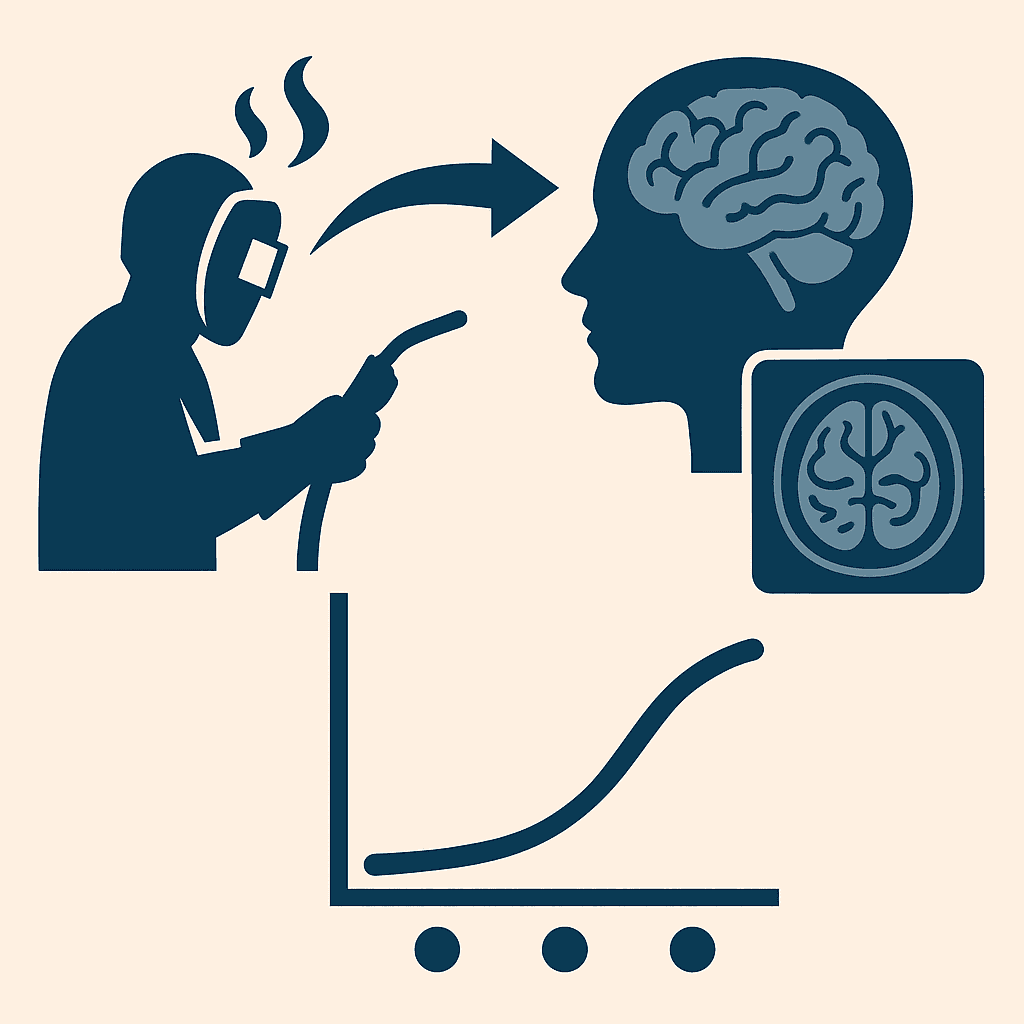
The science is no longer speculative in the way courts perceived during the earlier MDL. Longitudinal human data, quantitative MRI biomarkers, and modern health-based exposure limits create a reliable and testable chain from exposure to injury. With a facility-focused docket and a standardized medical and industrial hygiene protocol, manganese cases that struggled a decade ago can more readily meet Daubert and reach juries today.
Legal Tech
Law Firm
Law
